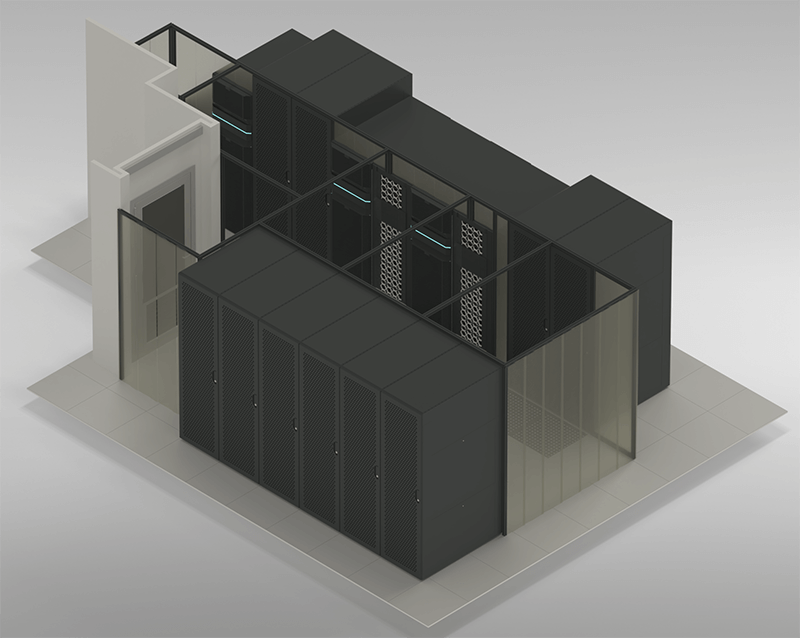
Racks allow stacking of servers and devices vertically, maximizing floor space.
Most server racks are designed to allow airflow, which is crucial for preventing overheating.
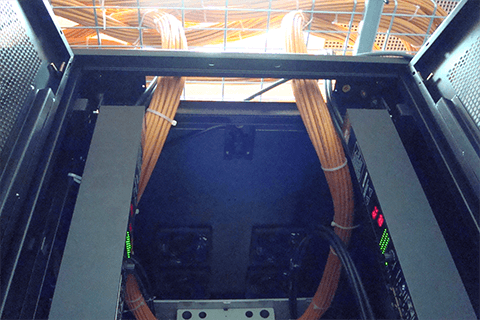
Server racks include features that help with organising and routing power, networking, and peripheral cables, reducing clutter and potential hazards.
Many racks come with lockable doors or panels to restrict physical access to sensitive hardware.
The height of equipment that can be mounted inside a server rack is measured in rack units. One rack unit (1U) is equal to 1.75 inches (44.45 mm). Racks typically range from 12U to 60U in height, meaning they can accommodate a wide range of equipment.
The standard width for server racks is 19 inches, a specification set by the Electronic Industries Alliance (EIA). External width commonly use in Singapore will be 600mm and 800mm
The depth can vary depending on the type of equipment being installed. Typical depths are 600mm (23.6 inches), 800mm (31.5 inches), and 1000mm (39.4 inches) and for current usage, we could go to 1200mm or beyond.
These racks have no side panels or doors, providing excellent airflow and easy access for maintenance. They are commonly used in environments where security is less of a concern. Or it may be coming in as TWO pole rack, with cabling management as the first concern and rack was designed mainly for cabling deployment.
These racks have side panels, doors, and sometimes a lockable mechanism to provide added security and protect servers from environmental factors like dust. They also help with soundproofing and cable management.
These smaller racks are designed to be mounted on walls, saving floor space. They are typically used for smaller networking equipment, routers, and patch panels.
Vertical rails inside the rack are used to mount servers and other equipment. The rails have pre-punched holes to attach hardware securely.
Some racks come with built-in fans or support for liquid cooling systems to ensure proper temperature regulation.
Cable trays, hooks, and clips are provided to keep cables neat and organised.
These devices are installed within the rack to distribute electrical power to the servers and other equipment
Ensure the rack can accommodate the size (U height and depth) of your hardware.
Make sure the rack can handle the combined weight of all installed equipment.
Choose a rack with appropriate ventilation or built-in cooling features, especially in high-density environments.
Depending on the sensitivity of the data and equipment, consider racks with lockable doors and panels.
Opt for a rack with enough space to accommodate future expansion as your IT needs grow.
The backbone of any data center, server racks hold thousands of servers that power cloud computing, big data analytics, and internet services.
Small to medium-sized businesses use server racks to store networking equipment like switches, routers, and small servers.
Racks are crucial in housing equipment that enables internet, telephone, and data transmission.
Flexibility, modularity, functionality and design are key criteria when selecting a suitable enclosure.
Our pledge to service, which provides us with a cutting edge to guarantee customer satisfaction.